
Presentation Skills: Finding Their Voice (Without the Stage Fright)
How to turn public speaking into a daily leadership habit that builds genuine student influence.

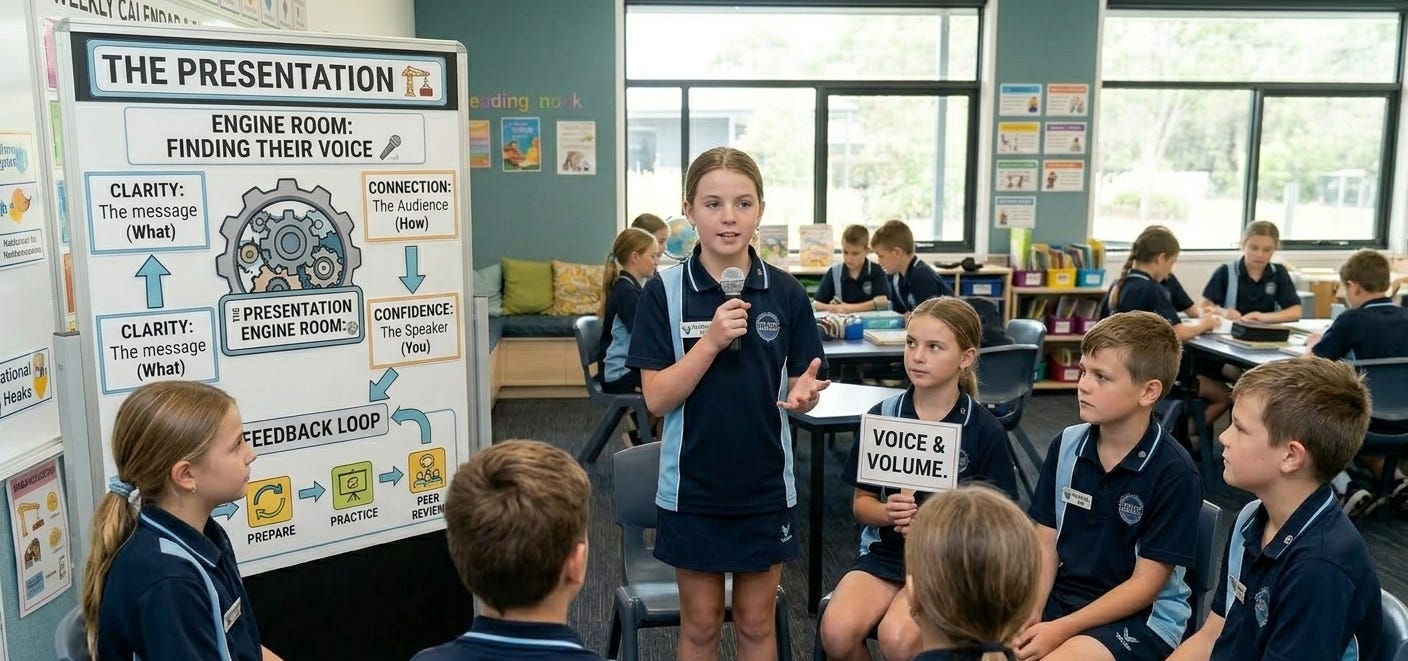
What do you think of when you hear the term “Presentation Skills”?
Is it:
Standing in front of a group?
Reading from a slide?
Delivering your message to a group?
Alternatively, do you see it as something more robust and powerful?
From a leader’s perspective, presentation skills are the engine of influence.
It’s about the ability to take an idea and move it from one mind into another.
How student leaders use presentation skills
Whether a student is speaking to the whole school or just persuading two peers in a group, they are learning how to use their voice to make an impact.
As a teacher, you don’t need to turn every lesson into a formal speech competition.
But there are so many opportunities to build kids’ verbal skills.
Start by lowering the threat level
Your immediate goal should be to lower the threat level of speaking while raising the skill level of communication.
When you give students low-stakes opportunities to find their voice, you aren’t just teaching them to talk; we’re teaching them that what they have to say actually matters.
There are many ways you can harness your students’ ability to present their ideas without it becoming a high-pressure event.
Here are five simple ways to get started.
1. Employ The 1-Minute Microphone
Most of the fear in public speaking comes from the unknown of being the centre of attention.
Break that fear with the 1-Minute Microphone.
At the end of a lesson, ask a student to give a sixty-second summary of what the class just learned.
No notes, no podium—just one minute of clear, concise sharing.
It turns presenting into a normal, daily habit rather than a scary event.
2. Focus on The Hook
Experienced speakers know that if you don’t grab people in the first ten seconds, you’ve lost them.
Instead of a full speech, have students practice just the Hook.
If they were going to talk about the environment or a book they read, what is the one sentence they would use to make their classmates lean in?
This teaches them the power of engagement and the importance of thinking about their audience first.
3. Have Fun With The Silent Speaker
So much of a presentation happens before a student even opens their mouth.
Have a Silent Speaker challenge in which a student conveys an emotion or a simple instruction using only their posture and eye contact.
It’s a fun, low-pressure way to teach them that presence is about how you carry yourself, not just the words you say.
4. Practise Peer-to-Peer Pitching
Leadership often happens in small huddles.
Have students practice “pitching” an idea to a partner or a small group.
If they want to change a classroom rule or suggest a new game for PE, they must present a 30-second case.
This shifts the focus from performance to persuasion, demonstrating that their voice is a tool for change.
5. Feed The Feedback Loop with Gold Stars and Growth Points
To improve, student leaders need to know what’s working.
Instead of you giving all the feedback, have the class identify one Gold Star (something the speaker did well, such as eye contact) and one Growth Point (something to try next time, such as slowing down).
This builds a culture where speaking is seen as a craft that can be practised and improved, rather than a talent you’re either born with or you’re not.
Why this Matters
Focusing on presentation skills isn't about adding public speaking to an already crowded curriculum; it’s about refining the communication that is already happening in your room.
By weaving these five habits into your day, you are doing the vital work of ensuring every student leaves your classroom with the confidence to be heard.
You aren't creating more work for yourself—you're simply giving your students the volume they need to lead.
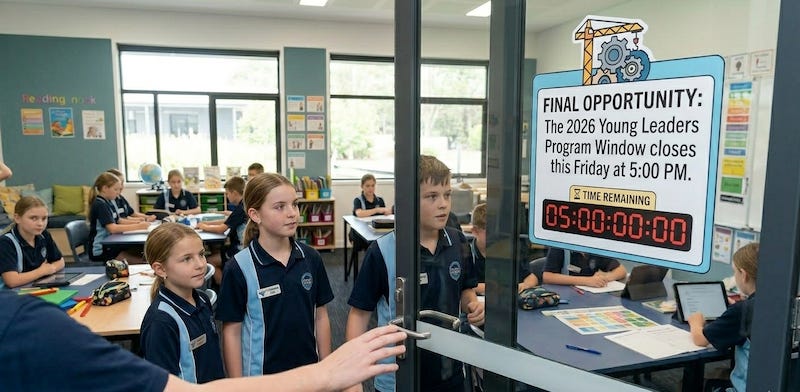
Final Call: 2026 Intake Closes This Friday
The habits of Presentational Intelligence, Emotional Intelligence, and Organisation aren’t just “extra” skills—they are the vital work of building a self-governing school culture.
Our intake is designed to help schools launch their leadership initiatives in a coordinated fashion. To maintain this schedule and ensure all student materials are ready for immediate use, Young Leaders Program intake will officially close this Friday at 5:00 PM.
This is your final opportunity to secure your 2026 materials:
Starter Pack: Year 5 foundation.
Premium Pack: Years 5 & 6 alignment.
Premium Plus: The full suite for Years 5, 6, and your elected leaders.
Secure your school’s access here before the portal closes on Friday