
From Student Leader to Resolution Expert: A Comprehensive Training Guide
Build genuine agency in your student leaders to manage conflict.

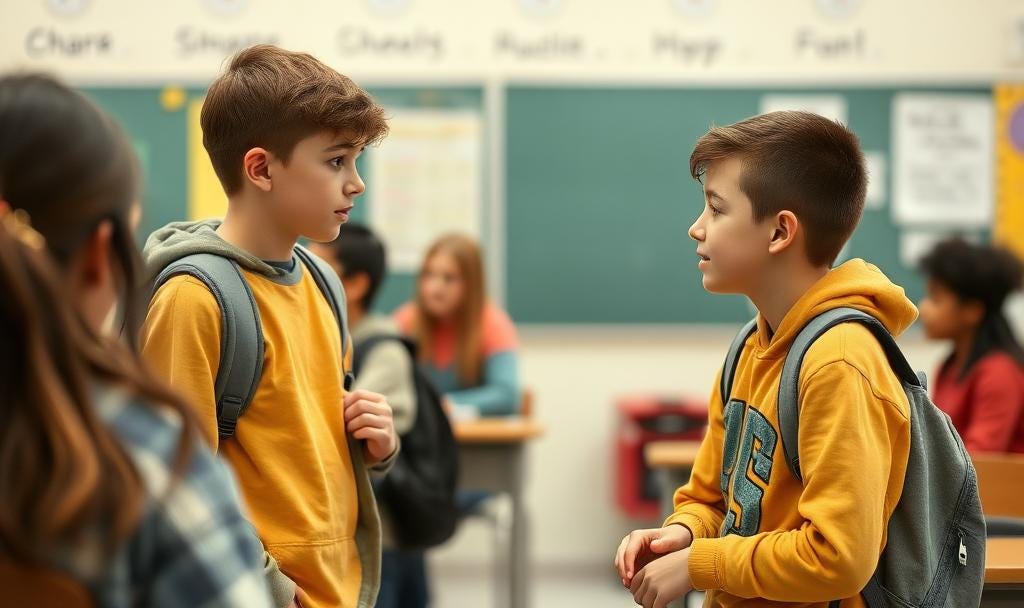
Conflict between students is a natural aspect of school life, and how it is managed can profoundly impact the school environment and students' well-being.
Student leaders are involved in many aspects of school life, from organising events to representing their classmates.
This exposure naturally places them in situations where conflicts may arise with others or among their peers.
And settling disputes is probably not in their remit.
But it should be
Possessing conflict resolution skills equips them to:
1. Prevent escalation
Leaders can identify potential conflicts early on and intervene before they escalate into more serious issues.
2. Promote fairness
They can help ensure everyone feels heard and that resolutions are fair and equitable.
3. Foster positive relationships
Student leaders can help maintain and strengthen peer relationships by facilitating peaceful resolutions.
4. Create a safe environment
Their active involvement in conflict resolution contributes to a school environment where students feel safe, respected, and valued.
5. Develop crucial life skills
Learning conflict resolution skills at a young age empowers student leaders with valuable tools they can use throughout their lives.

Key Conflict Resolution Skills for Primary School Student Leaders
Resolving disputes can seem complex, but it’s simpler than it looks.
The Young Leaders’ approach to conflict resolution (dispute management/peacemaking/mediation) involves these five areas.
1. Active Listening
It’s essential to pay full attention to what others are saying verbally and non-verbally.
How leaders act:
Listen attentively without interrupting.
Make eye contact and use open body language.
Ask clarifying questions to ensure understanding.
Summarise what the other person has said to show they have been heard.
Example: Two students are arguing over a game during recess. The student leader listens to both sides, asking questions like, "So, Sarah, you're saying that Emily didn't follow the rules?" and "And Emily, you feel that...?"
2. Empathy
When faced with a peer dispute, it helps to understand and share others' feelings.
How leaders act:
Try to see the situation from the other person's perspective.
Acknowledge the feelings of those involved in the conflict.
Show compassion and concern for how others are feeling.
Example: In the same scenario, the leader might say, "I can see that you're both upset. It's frustrating when you feel someone isn't playing fairly, and it's also upsetting to be accused of cheating."
3. Communication
Clear, direct, respectful communication is a key element is resolving disputes and ensuring everyone is heard.
How leaders act:
Use "I" statements to express their own feelings and needs (e.g., "I feel concerned when...").
Speak calmly and respectfully, avoiding language that blames or accuses.
Encourage others to express themselves clearly.
Example: The leader might guide the students to use "I" statements: "Sarah, can you tell Emily how you felt when that happened?" and "Emily, can you respond to what Sarah said?"
4. Problem-Solving
Help students work collaboratively to find solutions that are acceptable to everyone involved.
How leaders act:
Help those in conflict identify the problem clearly.
Encourage them to brainstorm possible solutions.
Facilitate a discussion to evaluate the solutions and choose one that is fair and workable.
Help them create an action plan to implement the solution.
Example: The leader could ask, "What are some ways you could solve this problem so you can both enjoy the game?" and then help them agree on a solution, such as taking turns or finding a different game to play.
5. Maintaining Impartiality
Treating everyone involved in a conflict equally and without bias is essential.
How leaders act:
Listen to all sides of the story without taking sides.
Avoid making judgments or assumptions.
Ensure that the chosen solution is fair and equitable for everyone involved.
Be aware of their own biases and take steps to address them.
Example: The leader ensures that both students have equal time to explain their perspectives and that the final solution doesn't unfairly advantage one student over the other.
Developing Conflict Resolution Skills in Student Leaders
In the past, kids probably would have picked up these skills in their families.
But times have changed.
Families have shrunk, so there are fewer siblings to practise on, and parenting is less skill-based and more outcome-driven today.
This means one thing - they must be taught how to resolve conflict.
Here’s how you can develop these essential skills in student leaders:
1. Training Workshops
Organise workshops or training sessions that explicitly teach conflict resolution skills, including active listening, empathy, communication, and problem-solving.
2. In-class role-playing
Use role-playing scenarios to give students opportunities to practice their skills in a safe, supportive environment.
3. Mentoring
Pair student leaders with teachers or other adults who can mentor them and provide guidance on conflict resolution.
4. Real-life application
Encourage student leaders to apply their skills in real-life situations, such as mediating disputes between classmates or helping to resolve disagreements during group projects.
5. Recognition and feedback
Acknowledge and celebrate student leaders who demonstrate practical conflict resolution skills and provide them with constructive feedback to help them improve.
Finally….
Giving student leadership responsibilities without equipping them to resolve conflict is like sending them to sea without oars.
It may work out okay, but don’t hold your breath.
Equipping students with the skills and processes to resolve conflict builds their confidence, relieves anxiety and builds genuine agency among your leaders.
Which is the whole point of student leadership development.
Do you know someone who’d benefit from reading this newsletter? If so, please share.

Empower Your Upper Primary Students to Lead the Way.
The start of the school year is the ideal time to move toward a student culture of Agency, Empathy, and Shared Responsibility.
The Young Leaders Program gives your students the tools to own their classroom environment, so you can focus on what you do best: teaching.
Designed for Busy Teachers
We’ve done the heavy lifting, so you don’t have to.
Turnkey Resources: Fully planned lessons, interactive activities, and student templates.
Instant Implementation: No “training days” required. Open the files and start your first session today.
Perfect Timing: Establishing these habits now is the ultimate Prevention strategy for classroom management issues later in the term.
Secure Your Premium Plus Package!
Equip your school with the best resources available today.
BONUS: Every school that purchases the Premium Plus Package before the end of February receives a self-initiated 60-minute coaching session with the program’s founder, renowned education expert Michael Grose!
Don’t miss this opportunity to transform your student body and gain expert guidance.